
Join 100,000+ business leaders
Subscribe to get our most-popular proposal eBook and more top revenue content to help you send docs faster.

.png)

Electronic signatures are now a standard part of credit union operations. Under the federal E-SIGN Act and applicable state electronic-transactions laws, a signature or record generally cannot be denied legal effect solely because it is electronic.
For compliance teams, however, legal validity is only part of the question. During an examination, audit, or dispute, can your credit union produce reliable evidence showing who signed, which document they reviewed, how they were authenticated, whether required electronic-delivery consent was obtained, and whether the completed record has remained accurate and accessible?
That evidence comes from more than the signature itself. It depends on the full process surrounding the document—from creation and approval to signing, retention, and retrieval.
This guide explains the controls credit unions should consider when managing electronically signed member documents and preparing for regulatory examinations and internal audits.
This article provides general information for credit union operations, compliance, and technology teams. It is not legal advice. Credit unions should confirm their specific obligations with qualified compliance professionals or legal counsel.
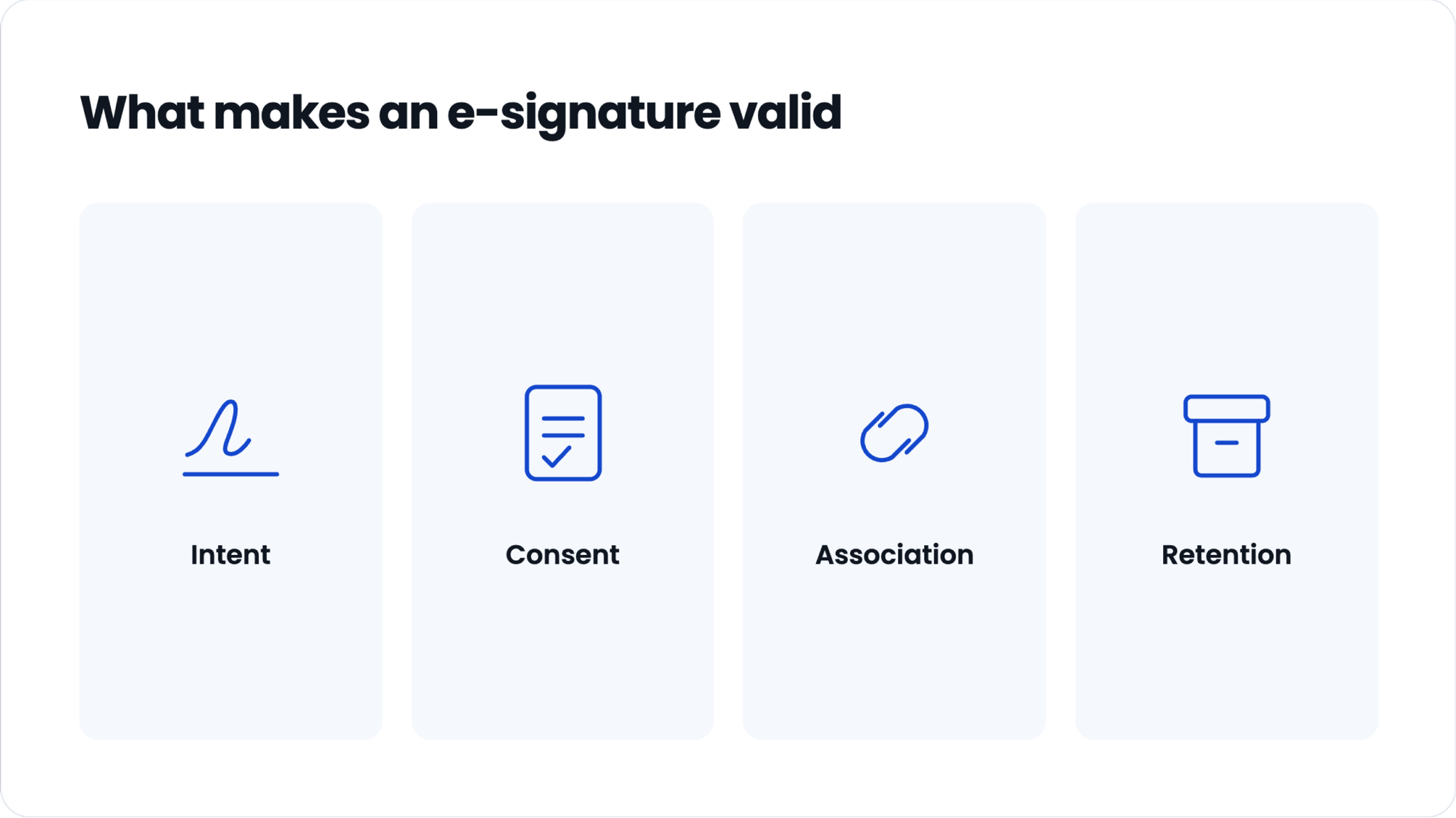
The E-SIGN Act establishes that a signature, contract, or other record generally cannot be denied legal effect solely because it is electronic. UETA provides a similar legal framework in the states where it has been adopted, although applicable requirements and exceptions may vary by jurisdiction and transaction type.
For credit unions, four principles are especially important:
1. Intent to sign
The electronic process should provide evidence that the signer intended to sign the record. A clear, deliberate signing action connected to a specific document provides stronger evidence than a passive or unclear interaction.
2. Consent to receive required records electronically
When another law requires information to be provided to a consumer in writing, E-SIGN generally allows electronic delivery if the consumer affirmatively consents after receiving the required disclosures. These disclosures address matters such as the scope of the consent, the right to withdraw it, procedures for requesting paper copies, and the hardware and software needed to access and retain the records.
The consumer must also consent electronically—or confirm consent electronically—in a way that reasonably demonstrates the ability to access the information in the format that will be used.
3. Association of the signature with the record
The credit union should be able to connect the electronic signature to the specific record and signer. The surrounding evidence should show which document was presented and which action represented the signer’s approval.
4. Accurate and accessible record retention
When a law requires a contract or record to be retained, an electronic version generally satisfies that requirement if it accurately reflects the original information and remains accessible to the people legally entitled to access it for the required period.
These principles show why electronic-signature compliance extends beyond the moment of signing. The consent process, document controls, supporting evidence, and retention practices all contribute to the reliability of the completed record.
1. Risk-based signer authentication
Authentication should reflect the risk of the transaction and be applied consistently. A routine service request may not require the same controls as a high-value loan.
What to have in place: documented authentication requirements by transaction type, secure access for external signers, appropriate controls for internal users, and a record of the method used.
2. E-SIGN consent records
When E-SIGN consumer-consent requirements apply, the credit union should be able to show what disclosure the member received, when consent was provided, and which version was in effect.
What to have in place: consent built into the electronic workflow, timestamped records, disclosure versioning, and a process for withdrawing consent.
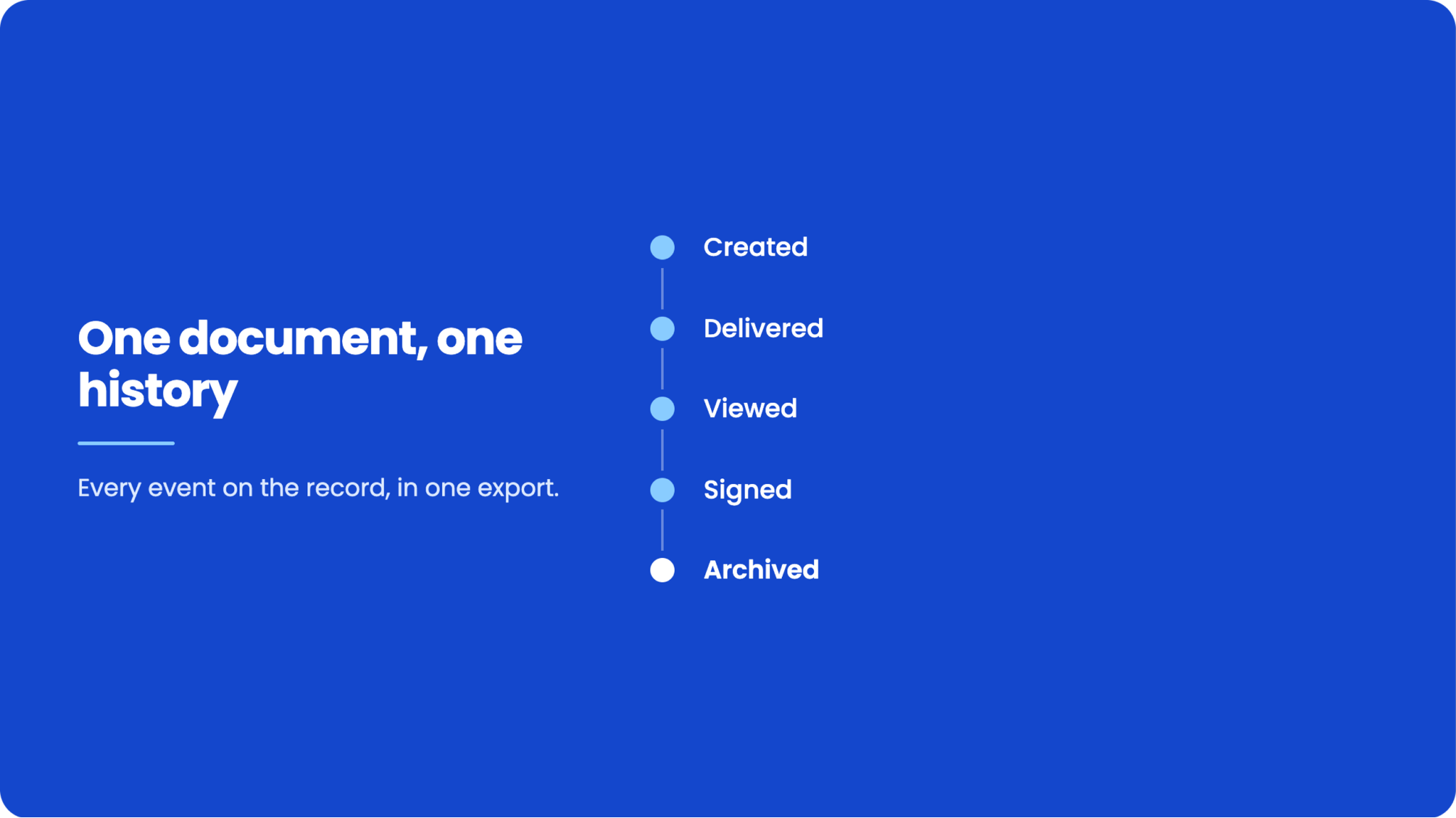
3. A complete audit trail
An audit trail should clearly show the document’s history without requiring access to multiple systems.
What to have in place: an exportable record of creation, delivery, viewing, approvals, changes, signature events, and completion.
4. Signature evidence and document integrity
The credit union should be able to connect each signature to the signer and document, and detect changes made after signing.
What to have in place: a signing certificate or comparable evidence, preservation of the completed document, and version history for later changes.
5. Retention and recovery
Retention requirements vary by document and regulation. Part 749 also requires federally insured credit unions to preserve and be able to reconstruct defined vital records.
What to have in place: retention rules covering both documents and signature evidence, reliable search and retrieval, clear record ownership, and documented recovery arrangements.
6. Access controls and separation of duties
Reviewers may evaluate who can create templates, send documents, approve transactions, and access completed records.
What to have in place: role-based permissions, SSO and timely deprovisioning, controlled template changes, and approval workflows appropriate to the risk.
7. Vendor due diligence
Using a third-party platform does not remove the credit union’s responsibility to manage compliance and operational risk.
What to evaluate: security and certifications, hosting and data location, business continuity, subprocessors, incident response, service commitments, and the process for exporting documents and supporting evidence when the relationship ends.
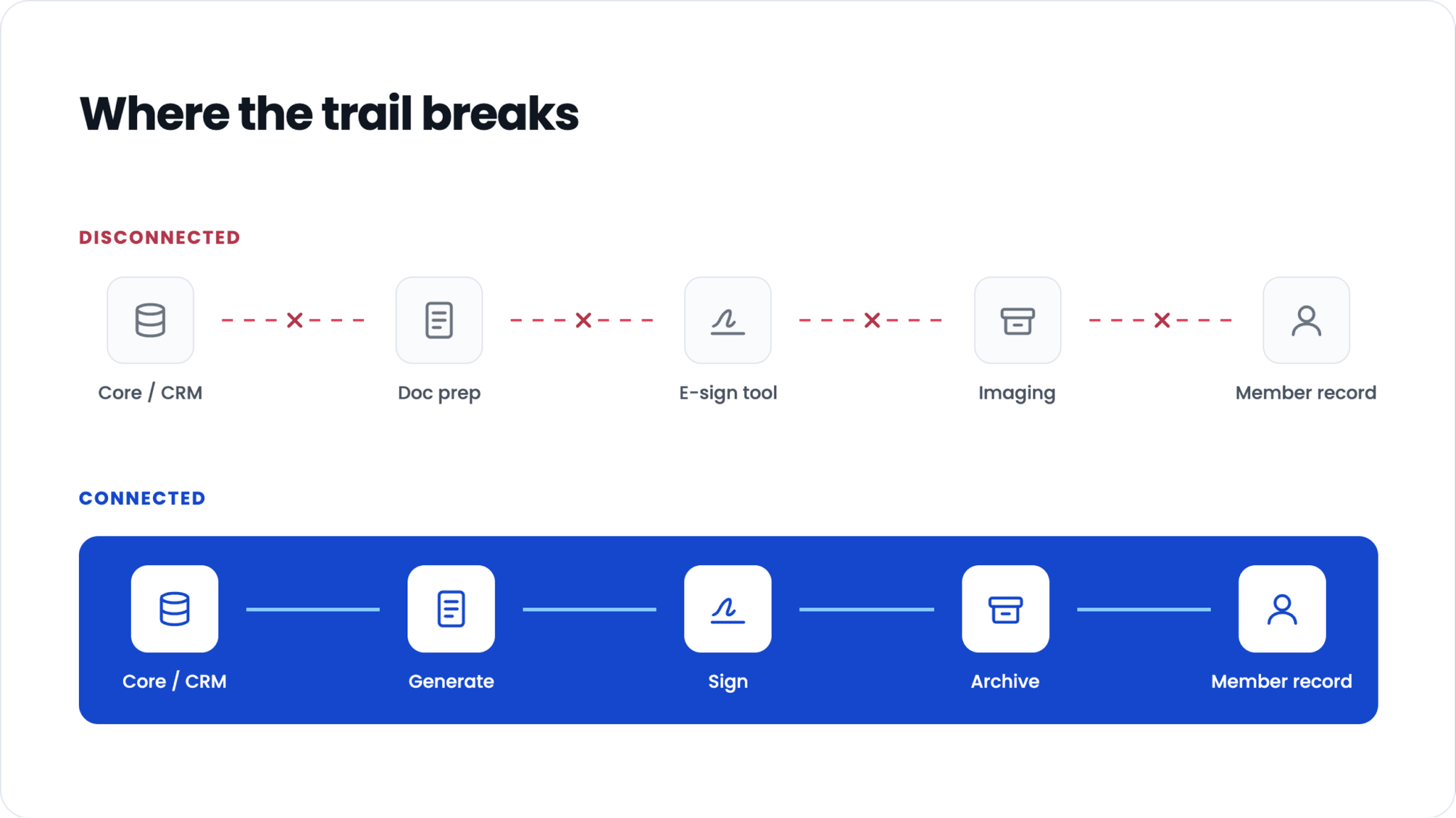
An examiner reviewing a member file may look beyond the signature to the full document process: how the document was created, which template was used, who approved it, whether supporting records were collected, and where the completed package was stored.
Often, only the signing step is automated. Staff still copy data from the core or CRM, prepare documents manually, send them through a separate e-signature tool, upload completed files to an imaging system, and update member records.
These handoffs can introduce inconsistencies, weaken version control, and leave gaps in the audit trail. Closing them requires connecting document creation, approval, signing, retention, and system updates—not simply adding another e-signature tool.
DocStudio supports the full document lifecycle, with e-signature built into a broader process for document creation, approval, completion, and retention.
DocStudio works alongside a credit union’s existing systems rather than replacing them. The integration approach is defined based on each credit union’s technology environment and requirements.
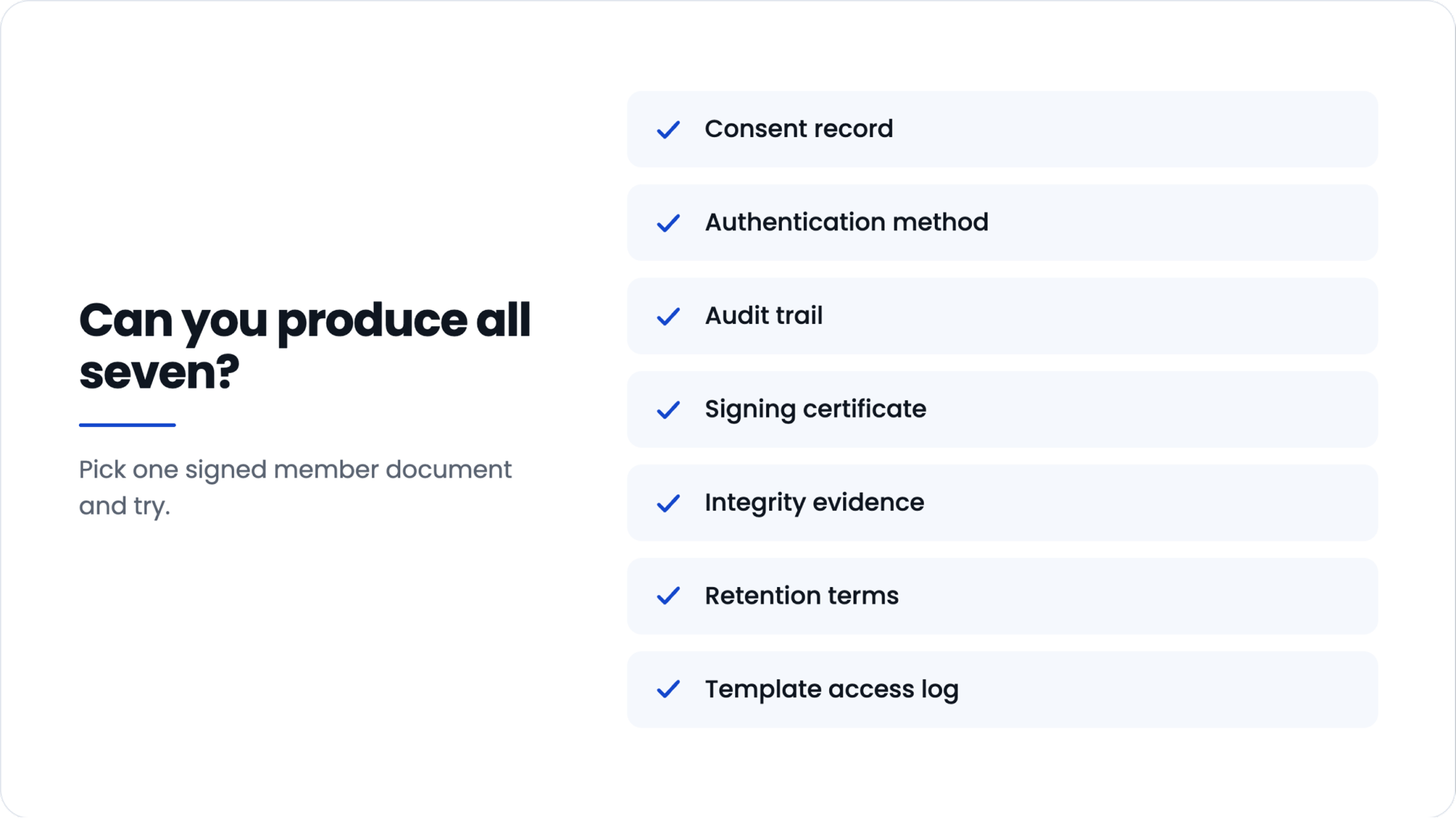
Select one recently signed member document and see whether you can quickly produce:
If this information requires multiple systems, vendor assistance, or significant manual research, you may have an opportunity to strengthen your document process—not just the signing step.
See what full-lifecycle document compliance looks like in practice. Book a demo

.png)
.png)
.png)